Module 5 - Installing OS6
Introduction
This module describes the first-time installation of the OS6 GUI and can also be used to support when updating the software to the latest release.
Preparing for the Install or Update of OS6 Software
Some or all of the following may be required to complete an installation:
- A complete Config folder
- The system description file
- System maps. These will either be kept in the config folder for standalone installations or on the C:\ drive of the CU for networked installations. Maps are usually stored in a maps folder. Observe the full folder path when copying to other CUs
- A software license. The software license export will provide the necessary information required to gain a licence if one doesn’t already exist
- A copy of the appropriate installer
Ensure that before upgrading a system, the current config is exported.
OS6 Software Install or Update
Luna regularly releases minor and critical updates for the OS6 software. The process for installing both is the same unless there have been hardware configuration changes that require additional attention. In all cases, the series of actions to perform are the same. Please note to upgrade from one major version to another, requires a discussion with Luna as there may be compatibility issues.
Before installing or updating the software the following actions should be undertaken:
- Read the release notes carefully to check for any specific installation instructions and compatibility issues.
- Check that the system is complete and that all nodes are in communication with each other. This can be done using the 'Pre-Install Checker' which can be found in the 'Install Scheduler'
- Make a backup of the current system Config.
- Uninstall the previous release of software from all CUs connected to the system.
It is not possible to upgrade to a new version of Software without having a 'complete' System. In other words all PUs are availalbe on the network
System Licencing
At various points it may be necessary to provide licences for the OS software. Licences can be obtained from the auth server or by contacting Luna Support. If a licencing window appears press Save System Information and send the generated licence request file to the appropriate party.
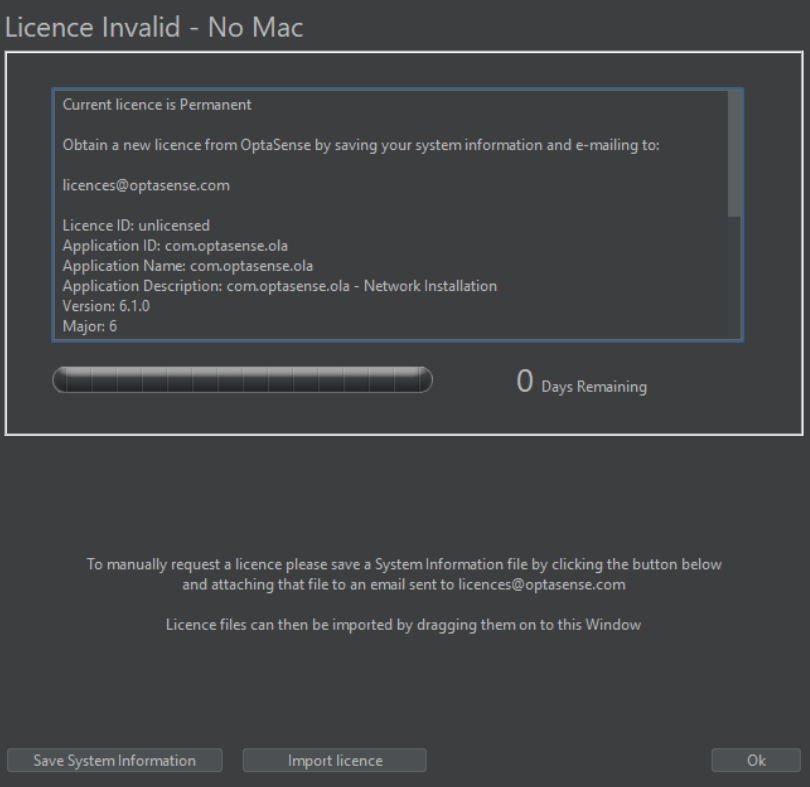
HavingOnce the licence (.lic) file is received, drag and drop the file into the licence window. If the licence is accepted, the window will change to indicate that it was successful and the length of time remaining on the licence. The number of days remaining on the licence will be indicated or in the case of permanent licences an infinity symbol will be displayed.
Once licenced, press OK to continue.
Installing OS6
If installing OS6 onto a new CU, it is not required to change any system functionality, and the new CU can join the existing installation.
When upgrading a system make sure that all instances of the OS6 gui have been closed. Other windows user accounts may still be running the software.
The process for installing is as follows:
-
Open the OS6 setup application
-
The OS6 setup wizard will start. Select Next.
-
Follow the on-screen instructions
-
Repeat these steps for each CU on the system
First time install OS6 specifics
The following actions need to be performed during a first-time install. They will not need to be applied during an update or when adding an additional CU is added.
Starting the OS6 System Install Scheduler
The following steps need to be followed to configure the system.
-
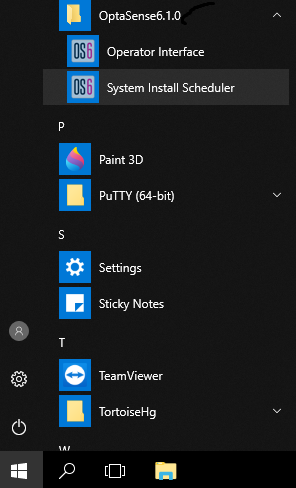
Run the System Install Scheduler from the Windows start menu.
-
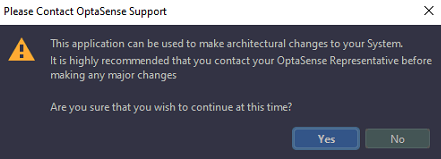
A warning window will appear informing the user the application can be used to make architectural changes to the system. Click Yes to proceed.
-
Enter the IP address of the PU and press Next. For a system that is made up of multiple PUs, choose the IP address of the first node.
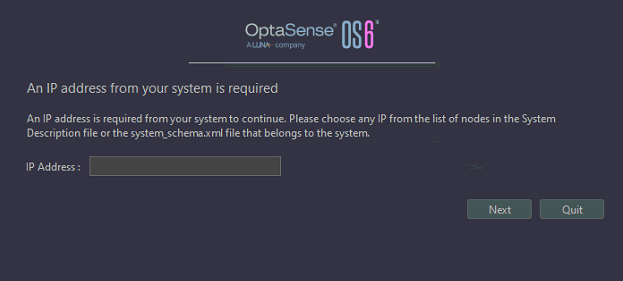
-
A notification window will appear informing the user that the system would like to perform a new system install. Select Close.
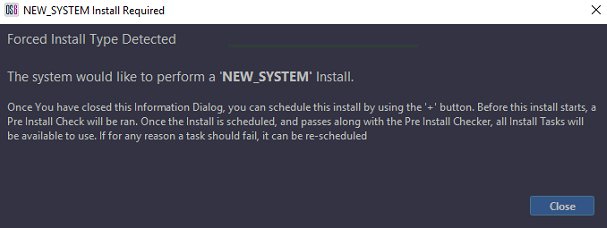
-
To start the process of setting up the system, click the + symbol and select New System.
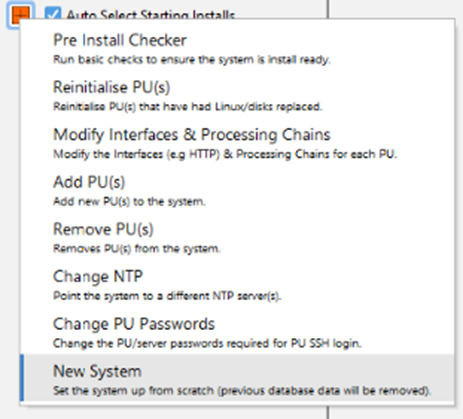
-
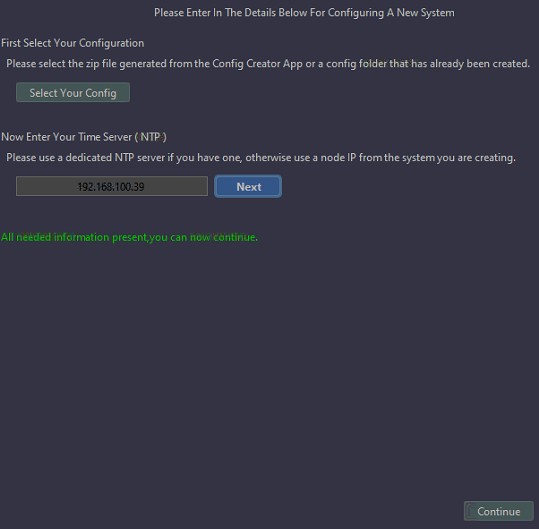
A Config selection window will appear. Click Select Your Config and browse to the config that is going to be used on the system then click Open.
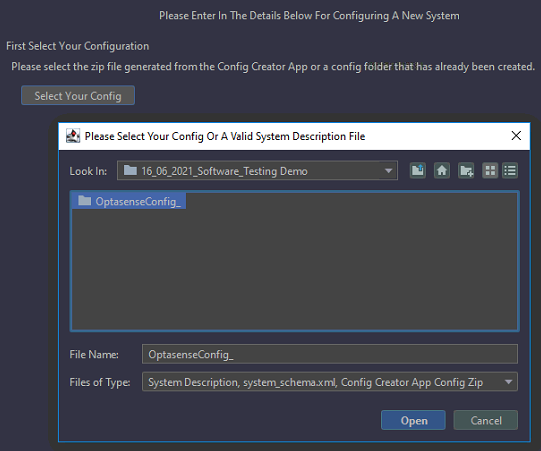
-
A box will appear asking for the IP address of the NTP source. Enter the IP address of the NTP server and click Next.
A check will be performed that the NTP server is contactable. Text will appear in green if the system has successfully connected to the NTP source. The text will appear red if it was unsuccessful. Note: In OS6, the use of an NTP server is mandated. This will either be an NTP server provided by the client or the use of an Luna provided GPS/Modem unit enabled for NTP functionality.
noteIn the event that an NTP server is not available, one of the system nodes can be used as a temporary NTP server to allow the system installation to complete. This should not be relied upon in the long term as the system time will drift.
-
Click Continue
-
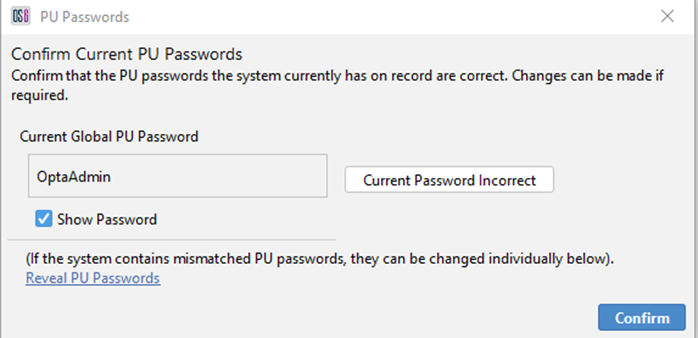
The system will than ask for confirmation of the current system wide PU password. In the unlikely scenario that there are mismatched PU passwords, this display allows the current password to be specified on a per PU basis. Click confirm to proceed to the next step.
-
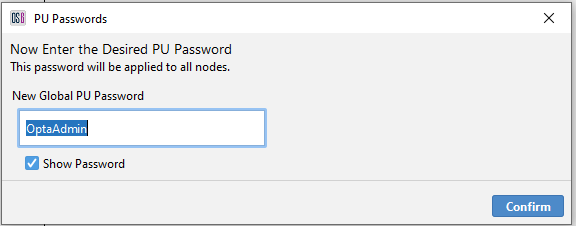
The final step will ask for the desired system wide PU password to be specified. If the password does not need to be changed from the current password, you can proceed without making any changes. Once confirmed, the new system task will run on the main display.
-
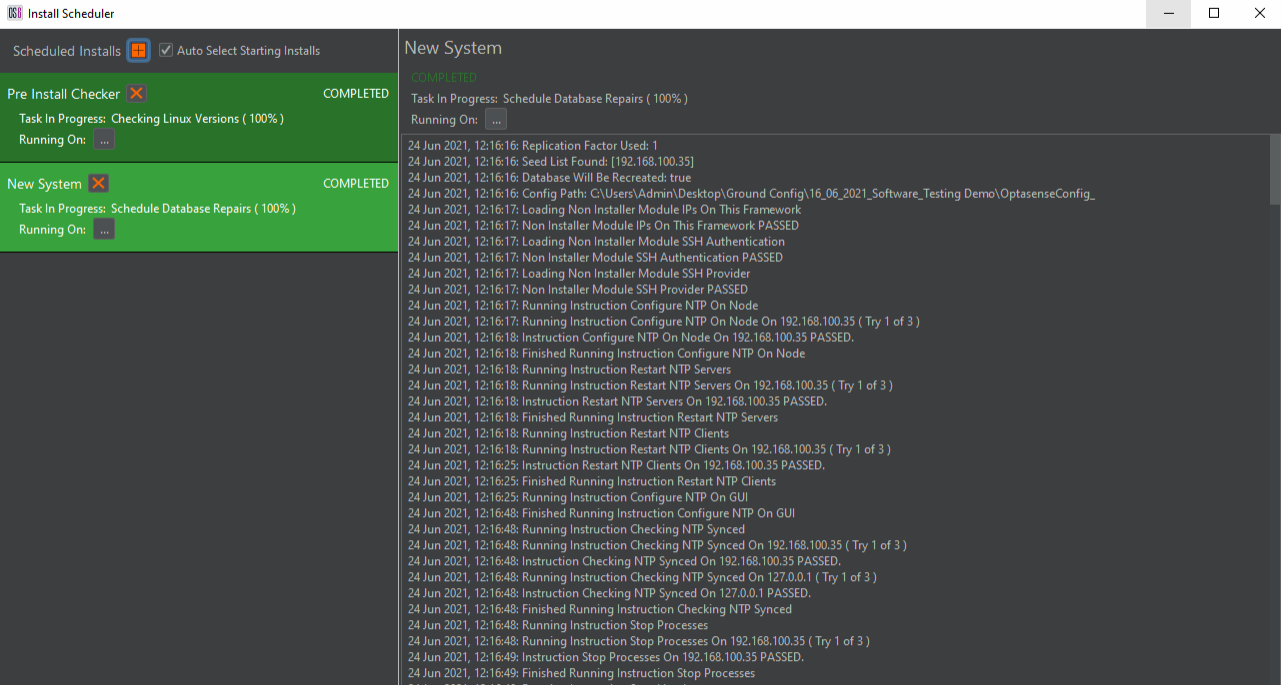
The scheduler will run through a series of tests to ensure the system meets the minimum requirements to launch the software. Once the tests have passed, the scheduler will configure the system. Tasks will change to green as they are successfully completed. Failed tasks will show as red. Details of why a task has failed are displayed to the right of the window by selecting the task. On successful completion of both tasks, the scheduler can be closed.
First time running on a new CU
After a new system install or when connecting a new CU to an existing system the next step is to launch the OS6 Operator Interface software from the Start menu. If the CU that the software is being launched from has previously connected to the system then it will attempt to access that system again, otherwise the software will request an IP address of the system to be connected to.
Starting OS6
After initial loading, the login screen will be displayed.
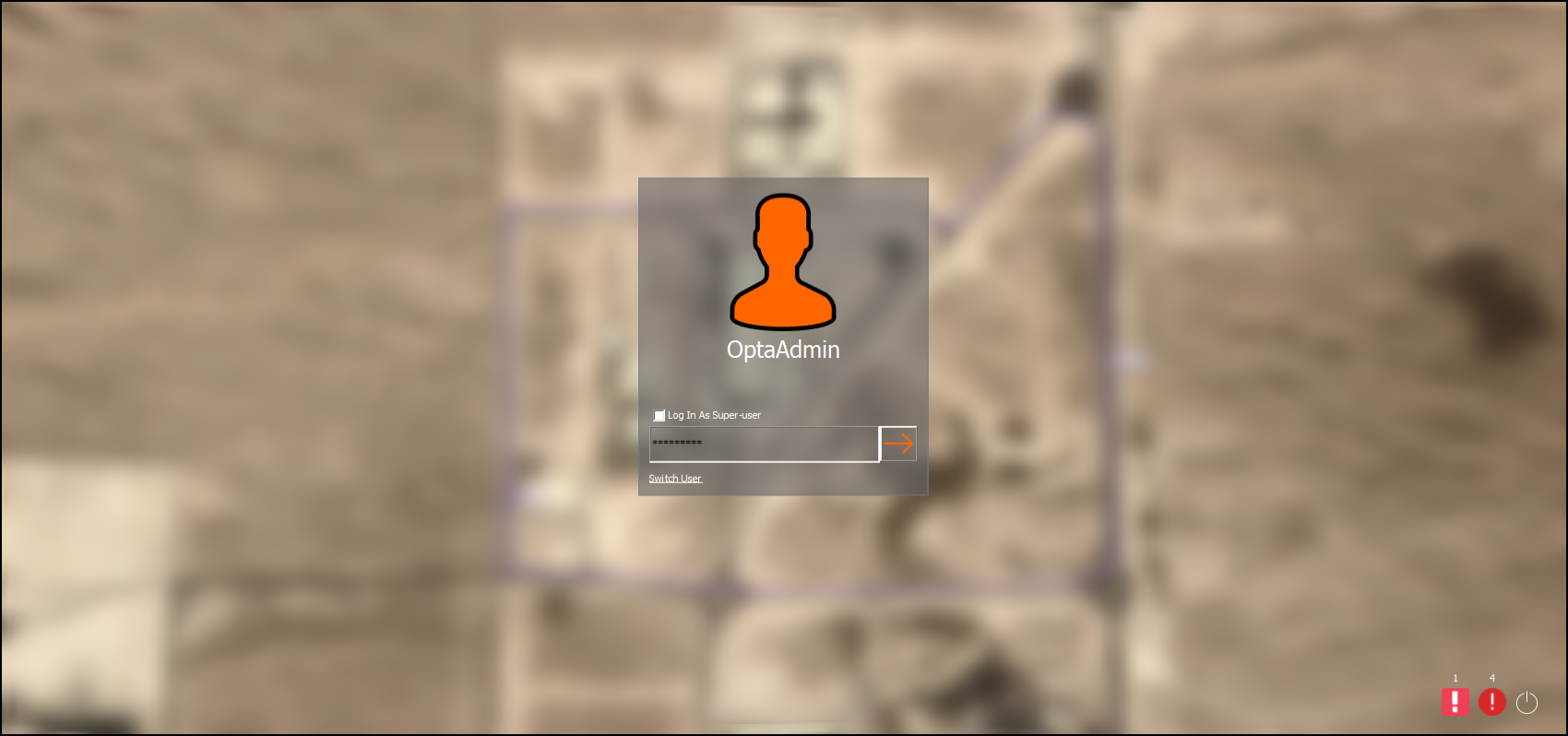
If no user account has been created the system will prompt for one to be. Otherwise, the system should be logged into with a Super User account so that the it can continue to be configured.
Accounts and Roles
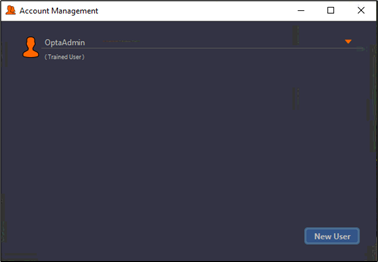
The accounts on a system can be modified via Account Management Window. New users can be added by clicking the ‘New User’ button. Note: The access that a user has will depend on their own user type. For instance, Light Users will only have the access rights to change their username and password.
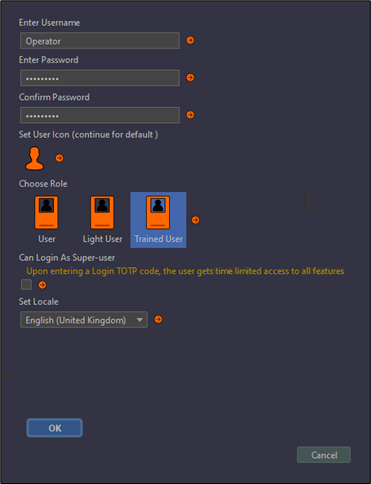
The user details can then be populated and assigned the suitable role. Once complete, press OK and the new user will appear in the account management window.
Alert Filtering
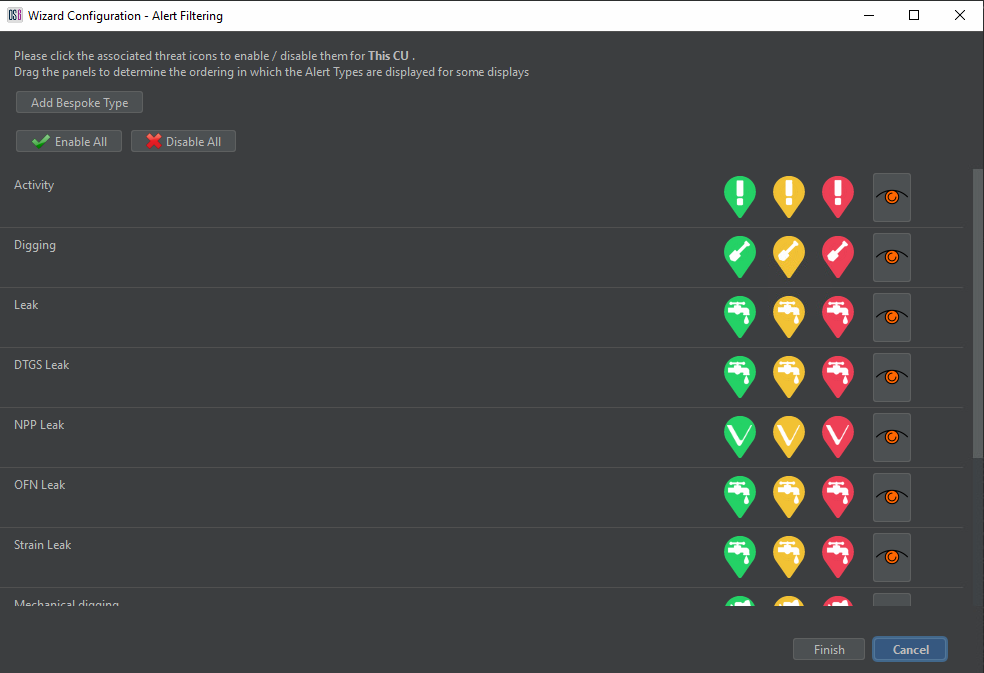
Threat filtering allows configuration of the alerts that will be seen on the system. The Alert filtering panel can be accessed by typing Alert Filtering. The CU can be configured to show specific alert types and levels. This is specific to the CU allowing different CUs to be setup to monitor different aspects of a system. It is also possible to configure alert expiry times by selecting the icon to the right of the red alert. The alert expiry time determines how long an alert type will remain on the map window.
OPS Filtering
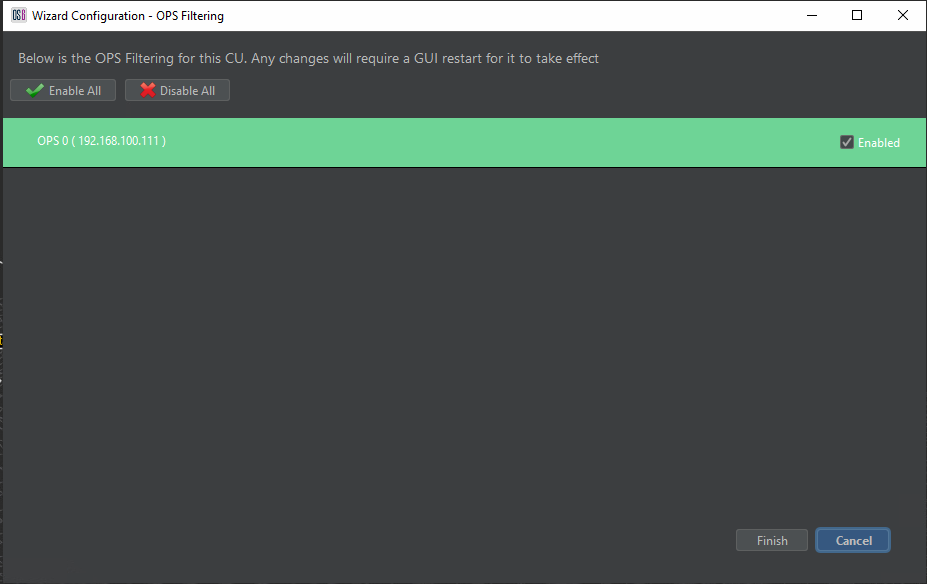
OPS filtering allows a CU to be configured to only see certain OPSs. The OPS filtering panel can be accessed by typing OPS Filtering.. This allows different control stations to be responsible for different parts of a large network.